Manwithvan Office Removals - Health and Safety Policy
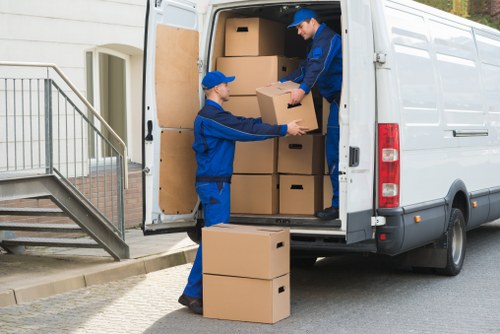 Manwithvan Office Removals is committed to maintaining a safe and healthy workplace for staff, clients and contractors engaged in office removal activities. This policy sets out the core principles and practical measures that govern our approach to safety during every stage of an office move. It applies to all employees and representatives involved in the manwithvan office removals process, from planning and packing to transport and installation.
We recognise that effective safety management depends on clear leadership, ongoing training and active participation. Senior management has overall responsibility for health and safety strategy, while team leaders and drivers are responsible for implementing controls on site. Every operative has a duty to cooperate, report hazards and use equipment properly to protect themselves and others during any office relocation.
 Risk assessment is central to our approach. Before any job, our operatives conduct a thorough site survey and hazard appraisal to identify manual handling risks, access restrictions, fragile items, electrical hazards and vehicle loading concerns. These risk assessments are used to create a job-specific method statement that outlines safe working practices and emergency arrangements for each office removal assignment.
Control Measures and Safe Working Practices
We implement a range of control measures tailored to office removal activities. These include the use of appropriate personal protective equipment (PPE), mechanical aids such as trolleys and lifting equipment, secure packing methods and traffic management for delivery vehicles. Our van operators follow secure loading and restraint procedures to prevent load shifts during transit and to minimise musculoskeletal strain.
Training and competence are priorities: all operatives undergo induction training, regular refreshers on manual handling techniques and vehicle safety, and specific instruction on moving sensitive equipment such as IT hardware. Training records are maintained and reviewed to ensure competence across the team.
To support consistent standards we maintain clear reporting routes for hazards and near-misses. Staff are encouraged to submit observations and suggestions, and managers will investigate incidents to identify root causes and corrective actions. This reporting culture helps to refine our systems for office removal safety.
Equipment, Vehicles and Manual Handling
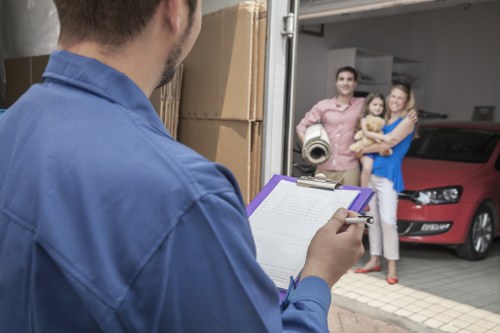 All vehicles used for office removals are subject to routine inspections and maintenance schedules to ensure roadworthiness and the safety of loading systems. Equipment such as sack trucks, lifting straps and specialist crates are inspected before use. Operators report any defects immediately and replacement or repair is arranged without delay.
Manual handling risks are controlled through a combination of task design, mechanical aids and team lifting where appropriate. Staff receive training in correct lifting posture and safe handling techniques, and supervisors ensure that heavy or awkward items are assessed before lifting. When required, specialist lifting equipment is employed to reduce physical strain.
We use packing systems designed to protect items and to simplify handling. Fragile or high-value items are recorded and packed in dedicated containers. Clear labelling and inventory practices reduce handling time and minimise the risk of accidental damage during transit and unpacking in the new office.
Emergency preparedness is integral to our safety arrangements. All teams are briefed on emergency procedures relevant to each site, including evacuation routes, first aid provision and actions for vehicle incidents. First aid kits are carried on vehicles and trained first aiders are available within our workforce.
Contractor and client coordination is managed carefully: where external trades or client staff are present, responsibilities are clarified in advance and joint risk controls are agreed to ensure safe access and movement. Communication protocols are maintained so that changes to the plan are shared promptly with everyone involved.
 Our policy emphasises continuous improvement. We undertake regular safety audits, review incident data and consult staff on ways to enhance safety performance. Where relevant, we update procedures and training programmes to reflect lessons learned and emerging best practice in office removals.
 The following practical commitments underpin our health and safety programme for office relocations:
- Proactive risk assessments and job-specific method statements for each move
- Regular maintenance of vehicles and moving equipment to safe standards
- Clear training pathways and documented competence checks for staff
- Use of appropriate PPE, handling aids and secure packing systems
- Prompt reporting and investigation of incidents, near-misses and hazards
Responsibility and review: Management ensures the policy is implemented and resourced. Supervisors monitor day-to-day compliance and provide support to operatives. The policy is reviewed periodically to ensure it remains relevant to the scope of our services and to incorporate improvements identified through audits and operational feedback.
In summary, this health and safety policy for Manwithvan office removal services provides a practical framework that balances operational efficiency with the protection of people and property. It is designed to be applied across different office move scenarios and to be readily adapted as new risks or methods emerge. All staff and contractors are expected to understand and implement the measures set out here to achieve safe, effective office relocations.